Concussion
Concussion
2024
2024
2024
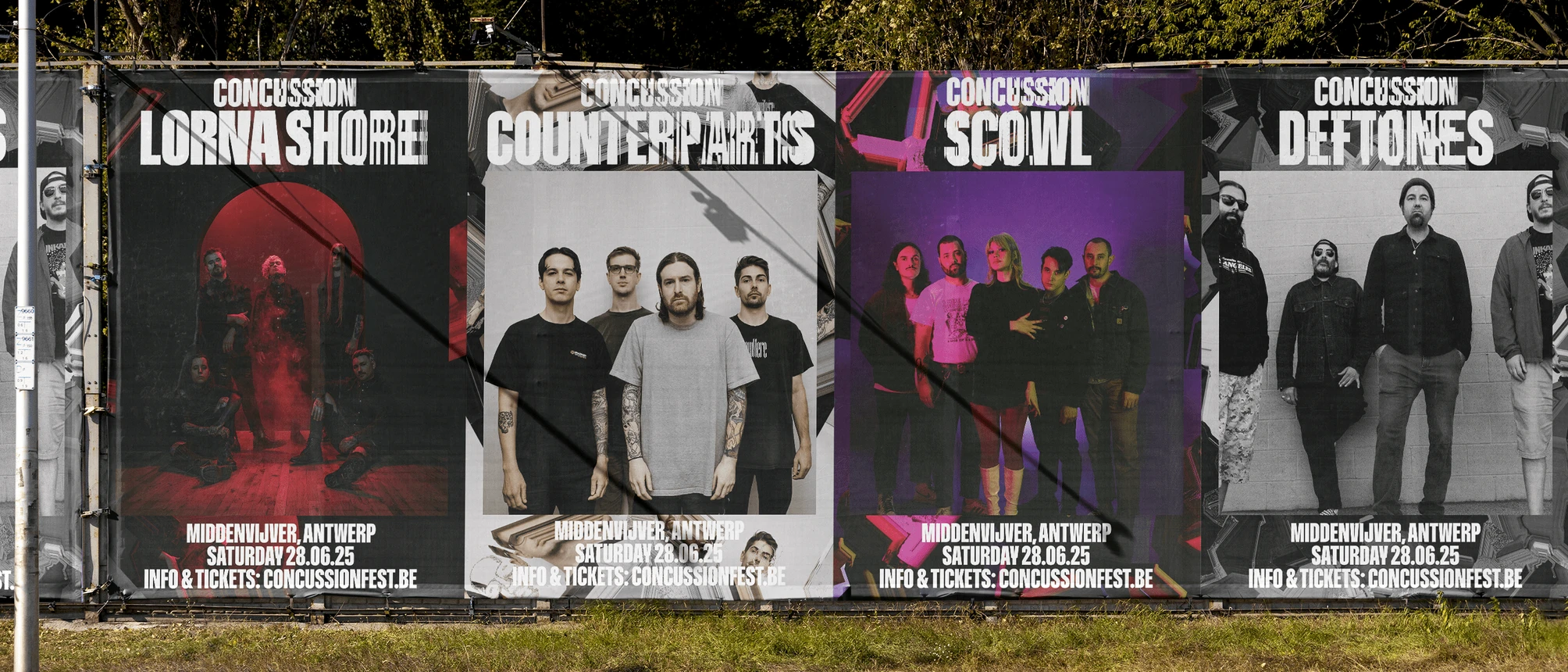
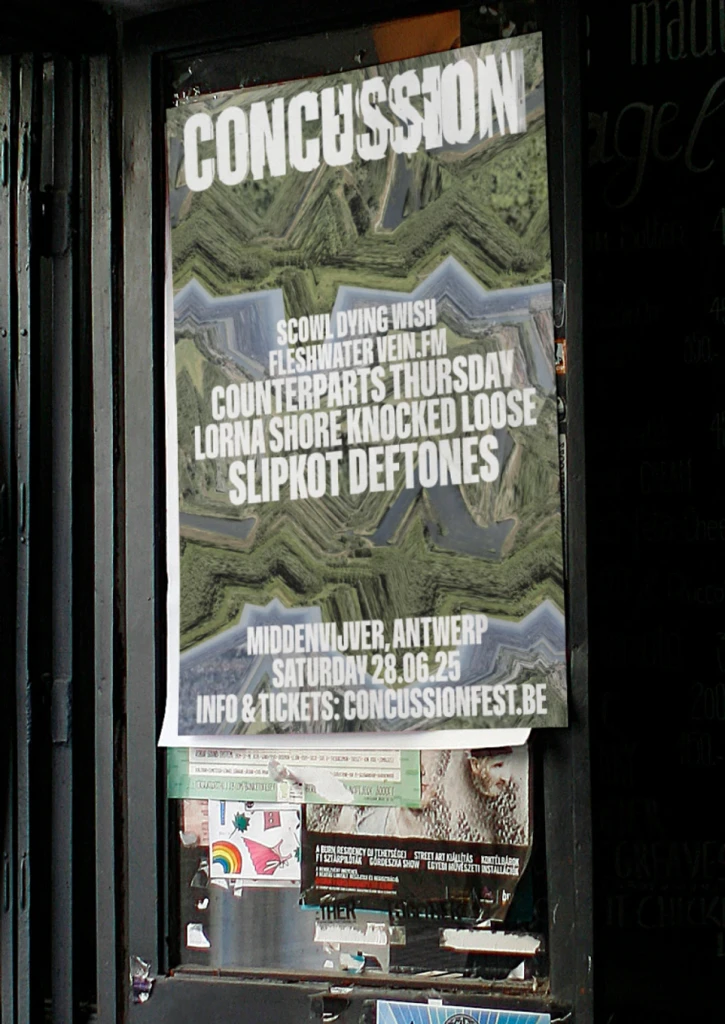
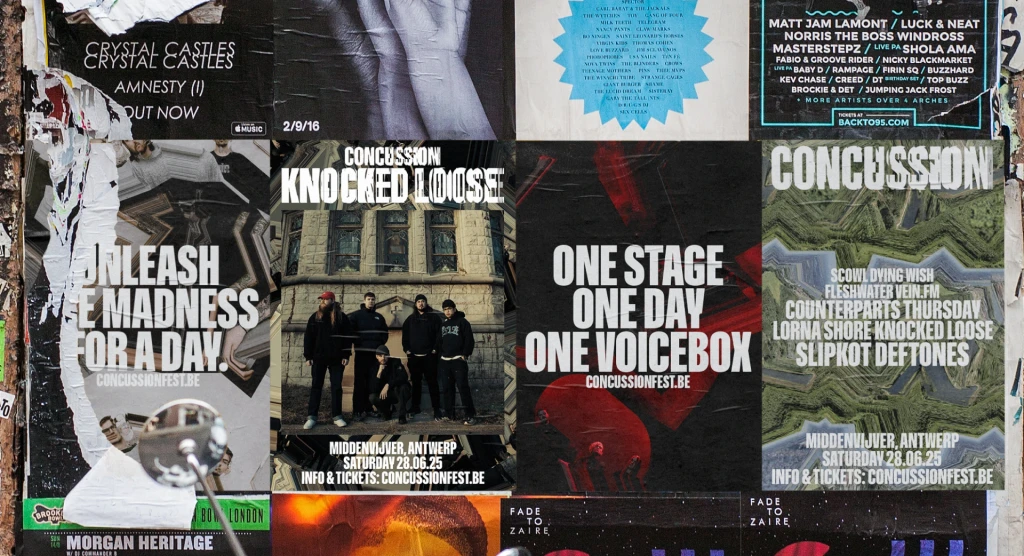
An exploration of how imperfection reveals authenticity. By translating the emotional honesty of distorted voices into kinetic typography and dynamic visuals, this project creates a brand experience that celebrates the moments when emotion breaks through.
More Info
More Info
More Info
Context
Heavy music has always understood what polished branding often forgets: the moments when control breaks, when emotion overwhelms composure, often carry more truth than perfect execution. This understanding became the foundation for a fictional festival brand created for my bachelor thesis, grounded in my connection to heavy music and the raw authenticity it embodies.
Heavy music operates on a fundamental truth: distortion isn't damage, it's revelation. When amplifiers push beyond their designed limits, when vocals strain at their breaking point, these moments don't obscure the music they expose its emotional core. The rawness connects because it refuses to hide behind polish. I wanted to explore how visual identity could operate with that same directness, allowing intensity to shape form rather than constraining it within predetermined boundaries.
Strategy
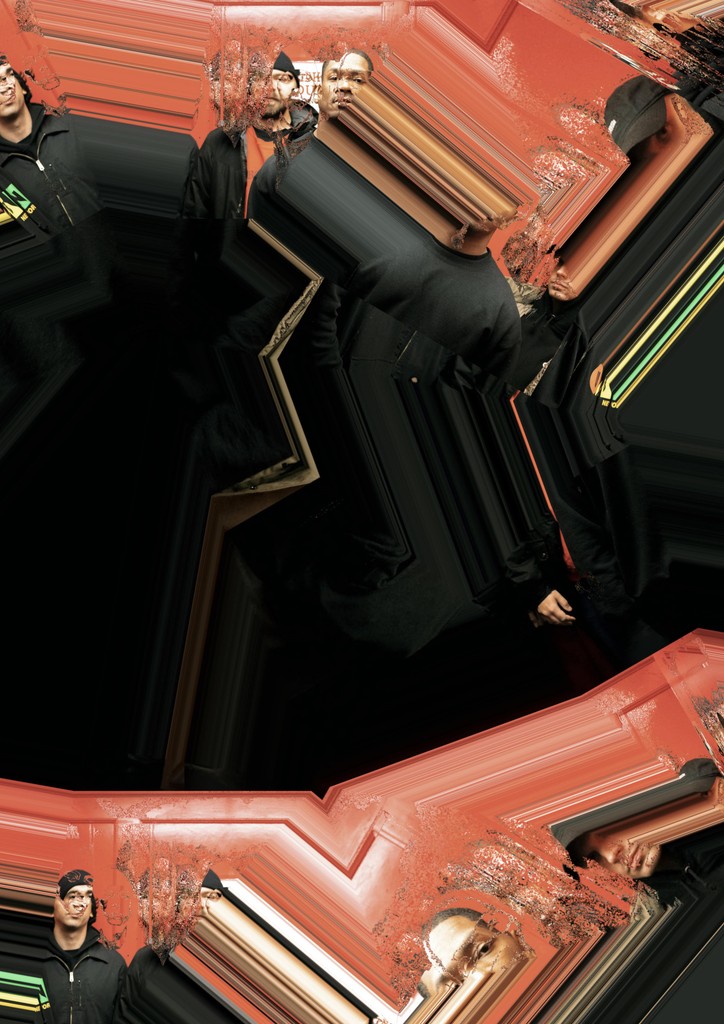
The design system is built on how sound physically behaves when pushed to its limits how it propagates through space, accumulates energy, and transforms through distortion. In heavy music, increasing volume doesn't simply make things louder; it fundamentally alters the sound's character, introducing harmonics and interference that create emotional weight. This became the organizing principle: visual elements respond to intensity the same way sound waves respond to amplification.
The challenge lay in translating sonic intensity into visual language that carries equivalent emotional weight. How could typography convey the pressure of building volume? How could motion capture the moment when controlled tension breaks into expressive chaos?
Solution
The solution emerged through movement as fundamental structure rather than applied decoration kinetic systems where every shift, fragment, and dissolution directly corresponds to acoustic principles. Typography needed to behave like waveforms under stress. Compositions needed to build and release tension through the same accumulation and discharge that defines heavy music's power.
More Info
Context
Heavy music has always understood what polished branding often forgets: the moments when control breaks, when emotion overwhelms composure, often carry more truth than perfect execution. This understanding became the foundation for a fictional festival brand created for my bachelor thesis, grounded in my connection to heavy music and the raw authenticity it embodies.
Heavy music operates on a fundamental truth: distortion isn't damage, it's revelation. When amplifiers push beyond their designed limits, when vocals strain at their breaking point, these moments don't obscure the music they expose its emotional core. The rawness connects because it refuses to hide behind polish. I wanted to explore how visual identity could operate with that same directness, allowing intensity to shape form rather than constraining it within predetermined boundaries.
Strategy
The design system is built on how sound physically behaves when pushed to its limits how it propagates through space, accumulates energy, and transforms through distortion. In heavy music, increasing volume doesn't simply make things louder; it fundamentally alters the sound's character, introducing harmonics and interference that create emotional weight. This became the organizing principle: visual elements respond to intensity the same way sound waves respond to amplification.
The challenge lay in translating sonic intensity into visual language that carries equivalent emotional weight. How could typography convey the pressure of building volume? How could motion capture the moment when controlled tension breaks into expressive chaos?
Solution
The solution emerged through movement as fundamental structure rather than applied decoration kinetic systems where every shift, fragment, and dissolution directly corresponds to acoustic principles. Typography needed to behave like waveforms under stress. Compositions needed to build and release tension through the same accumulation and discharge that defines heavy music's power.