Gilbert & George Foundation
Gilbert & George Foundation
2023
2023
2023
Together w/ Pauline Sirjacobs & Harlem Mwanzo
An exhibition exploring Gilbert & George's five-decade collaboration through mirroring and symmetry. By using their own visual language as the framework, the exhibition honors their unique partnership while creating space for other artists to join the conversation about what it means to work together.
More Info
More Info
More Info
Context
Gilbert & George have worked together for over five decades, but they remain two distinct individuals Gilbert standing opposite George, mirrored reflections of each other, yet functioning as a single creative entity. This duality defines everything about their practice: two people who become one voice, separate identities that form unified expression.
This branding for their exhibition explores that fascinating tension at the heart of their collaboration. How do you create a visual identity that honors the fact that they are genuinely two people Gilbert and George, each with their own presence while recognizing that together they create something that transcends their individuality? Their work has always engaged with this paradox, using their own bodies and identities as material, standing side by side yet facing each other, mirror images that are never quite identical.
The question became: how do you develop a brand system that holds this complexity while opening space for other artists to engage with similar questions about collaboration, identity, and the creative tensions that emerge when individuals work as one?
Strategy
The answer emerged from their own visual language and physical positioning. Gilbert & George have consistently used mirroring in their work not as decorative symmetry, but as a way to explore their dual nature. They stand opposite each other, reflected yet distinct, creating compositions where similarity emphasizes rather than erases difference. This mirroring became the conceptual foundation for the exhibition's visual identity.
By organizing the brand system through principles of reflection and opposition, the identity could embody the same tension Gilbert & George navigate in their partnership. Mirroring creates moments where their unified voice becomes visible two becoming one through careful positioning and visual echo. Yet the space between the mirrors, the slight variations in reflection, the inevitable asymmetries these openings allow the identity to expand beyond Gilbert & George alone, creating room for other artistic voices and perspectives.
The strategy wasn't simply to brand Gilbert & George's exhibition, but to create a visual language that operates the way their collaboration operates: holding multiplicity within unity, creating space for difference within sameness, allowing individual voices to coexist without erasing their distinctiveness.
Solution
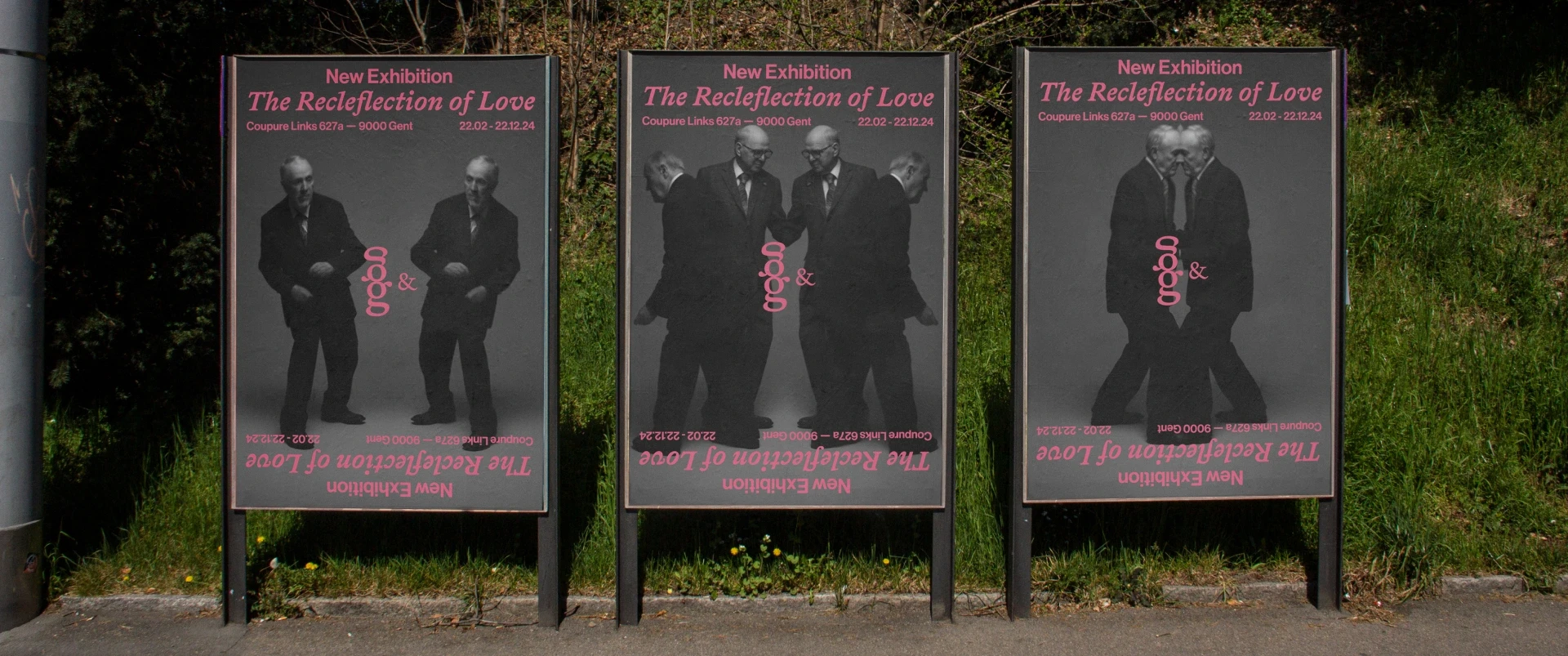
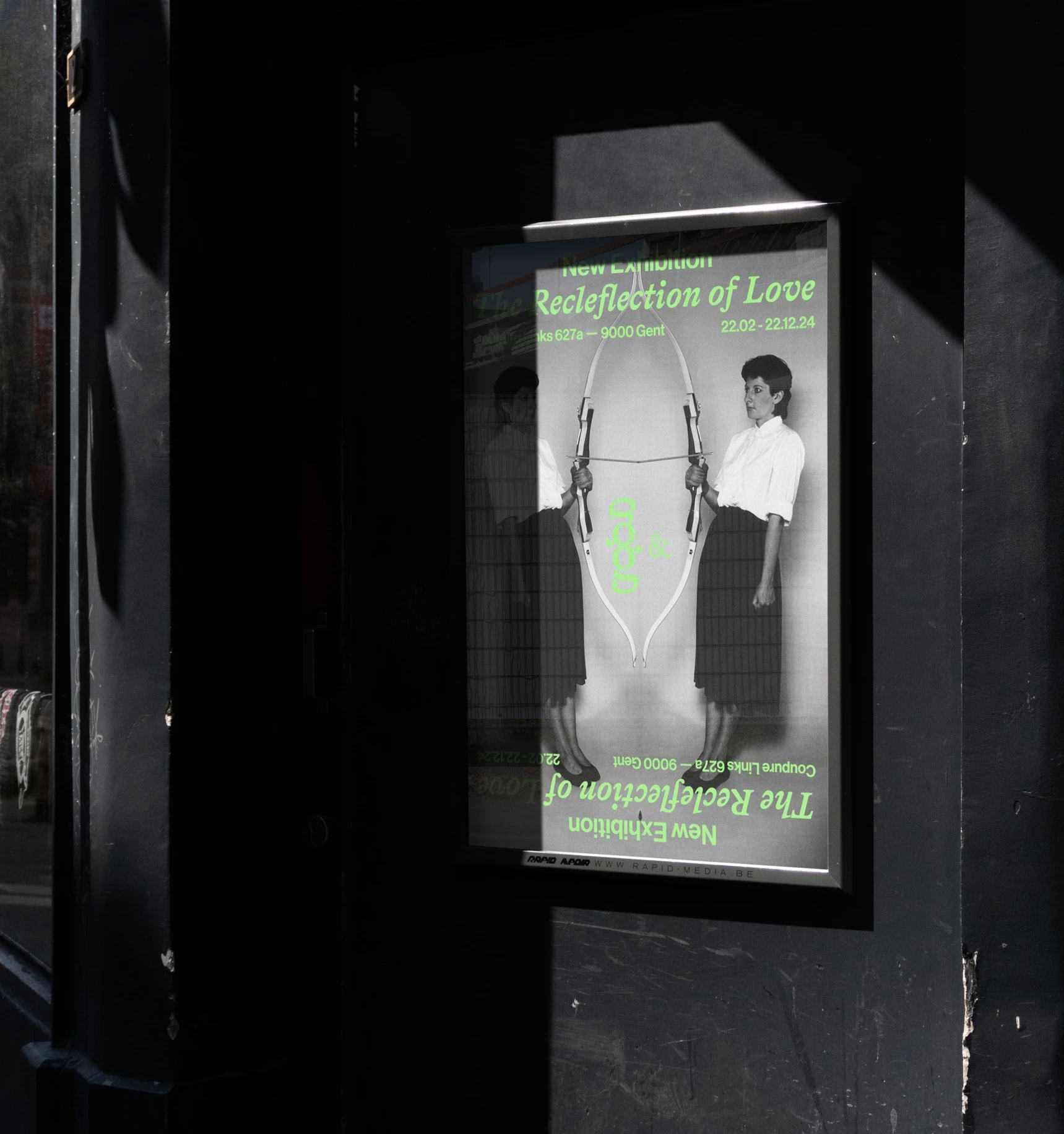
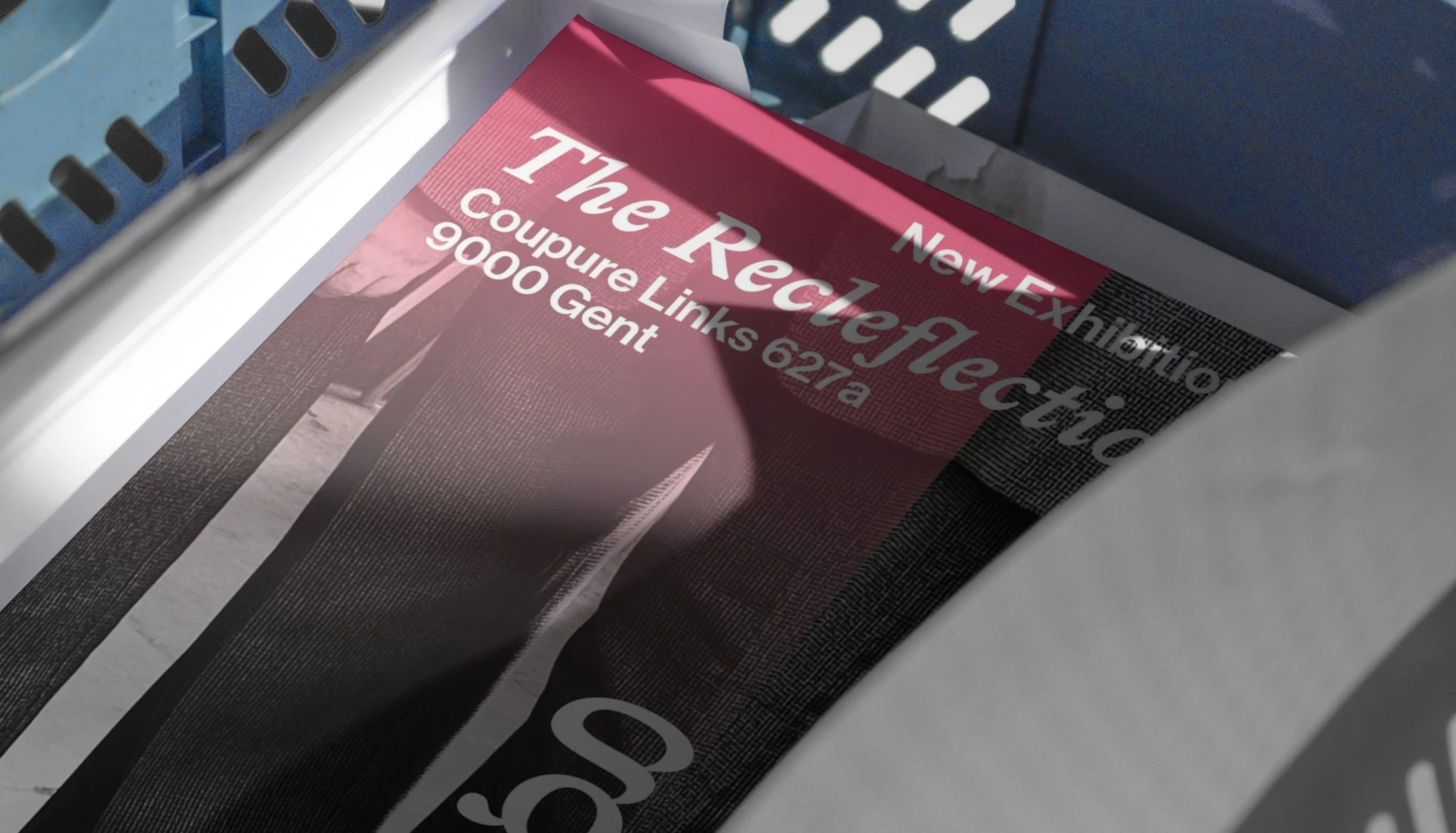
The resulting brand identity moves through carefully orchestrated tensions between unity and plurality. The core system uses mirrored typography and compositions elements that face themselves, creating symmetrical arrangements that reinforce singular vision. Yet these reflections are never perfect subtle shifts in weight, slight variations in color saturation, deliberate breaks in symmetry all create openings where complexity can emerge.
Typography reflects this duality: letterforms that maintain structural consistency while allowing for individual character, wordmarks that can be read as unified wholes or examined as distinct components. The G's in Gilbert & George mirror each other yet retain their separate identities one for Gilbert, one for George acknowledging both their partnership and their individuality.
What emerges is a brand identity that doesn't flatten Gilbert & George's duality into simple sameness but reveals how complex and productive that tension between one and two, between Gilbert and George, truly is. The system creates space for other artists not by diluting the core identity, but by demonstrating that unity can hold multiplicity that mirroring can emphasize rather than erase difference, that collaboration can strengthen rather than subsume individual voice.
More Info
Context
Gilbert & George have worked together for over five decades, but they remain two distinct individuals Gilbert standing opposite George, mirrored reflections of each other, yet functioning as a single creative entity. This duality defines everything about their practice: two people who become one voice, separate identities that form unified expression.
This branding for their exhibition explores that fascinating tension at the heart of their collaboration. How do you create a visual identity that honors the fact that they are genuinely two people Gilbert and George, each with their own presence while recognizing that together they create something that transcends their individuality? Their work has always engaged with this paradox, using their own bodies and identities as material, standing side by side yet facing each other, mirror images that are never quite identical.
The question became: how do you develop a brand system that holds this complexity while opening space for other artists to engage with similar questions about collaboration, identity, and the creative tensions that emerge when individuals work as one?
Strategy
The answer emerged from their own visual language and physical positioning. Gilbert & George have consistently used mirroring in their work not as decorative symmetry, but as a way to explore their dual nature. They stand opposite each other, reflected yet distinct, creating compositions where similarity emphasizes rather than erases difference. This mirroring became the conceptual foundation for the exhibition's visual identity.
By organizing the brand system through principles of reflection and opposition, the identity could embody the same tension Gilbert & George navigate in their partnership. Mirroring creates moments where their unified voice becomes visible two becoming one through careful positioning and visual echo. Yet the space between the mirrors, the slight variations in reflection, the inevitable asymmetries these openings allow the identity to expand beyond Gilbert & George alone, creating room for other artistic voices and perspectives.
The strategy wasn't simply to brand Gilbert & George's exhibition, but to create a visual language that operates the way their collaboration operates: holding multiplicity within unity, creating space for difference within sameness, allowing individual voices to coexist without erasing their distinctiveness.
Solution
The resulting brand identity moves through carefully orchestrated tensions between unity and plurality. The core system uses mirrored typography and compositions elements that face themselves, creating symmetrical arrangements that reinforce singular vision. Yet these reflections are never perfect subtle shifts in weight, slight variations in color saturation, deliberate breaks in symmetry all create openings where complexity can emerge.
Typography reflects this duality: letterforms that maintain structural consistency while allowing for individual character, wordmarks that can be read as unified wholes or examined as distinct components. The G's in Gilbert & George mirror each other yet retain their separate identities one for Gilbert, one for George acknowledging both their partnership and their individuality.
What emerges is a brand identity that doesn't flatten Gilbert & George's duality into simple sameness but reveals how complex and productive that tension between one and two, between Gilbert and George, truly is. The system creates space for other artists not by diluting the core identity, but by demonstrating that unity can hold multiplicity that mirroring can emphasize rather than erase difference, that collaboration can strengthen rather than subsume individual voice.